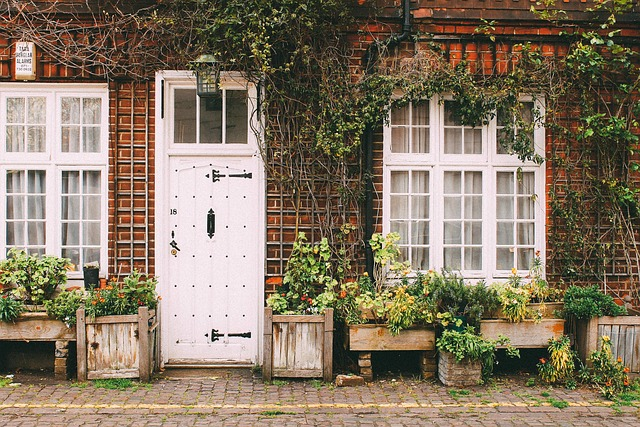

In the grand design of a home, doors are the quiet professionals—often overlooked yet fundamentally essential. More than mere passageways, they serve as silent guardians of privacy, sculptors of space, and expressions of architectural intention. The selection of a wooden door becomes an exercise in balancing poetry with pragmatism, where every choice whispers a story about the lives unfolding behind it. For those seeking to invest in these elegant partitions, understanding their soul—the materials that shape them—is the key to unlocking spaces that resonate with both beauty and purpose.
Solid wood doors remain the aristocracy of the category, pieces carved from nature's own repertoire. When one selects oak, mahogany, or walnut in its unadulterated form, they invest in more than a door—they welcome a living entity into their home. The grain tells a geological history; the weight in one's hand speaks of substance. These doors age with grace, developing character through years of service. Yet this nobility demands tribute: significant investment, careful climate control to prevent expansion or contraction, and a commitment to maintenance. They belong where statement and permanence are valued—in grand entrances, studies lined with books, or dining rooms that host generations.
The modern answer to nature's variability comes in the form of engineered solutions. Multi-layer plywood doors, with their cross-hatched anatomy, offer a lesson in stability. By laminating wood veneers in opposing directions, they achieve what solid wood cannot: resistance to the warping calls of humidity. Then there are MDF (Medium Density Fiberboard) doors—the perfect canvases. With surfaces smooth as parchment, they await the painter's touch, holding color with flawless consistency. These are the choices for clean-lined, contemporary spaces where precision matters more than patina. They deliver reliability at accessible price points, though they may lack the deep resonance of their solid-wood counterparts.
Between these worlds exist the composites—hybrid creations that balance cost and performance. The solid-core varieties, with their engineered wood hearts wrapped in attractive veneers, provide excellent insulation against both temperature and sound. Their hollow-core siblings offer economical solutions for interior spaces where traffic is light and acoustics are less critical. This spectrum of options means that every corridor, closet, and connecting space can have a door suited to its specific duty, without compromising the overall aesthetic vision.
Price weaves its narrative through every category. The solid wood door, ranging from $800 to several thousand dollars, is an investment in legacy. The engineered door, typically between $300 and $1,200, represents practical elegance. The composite door, from $150 to $800, offers democratic design. These numbers are not merely costs but compasses—guiding toward decisions that align with both budget and aspiration.
Beyond the material itself, the context of a door’s life determines its ideal form. An exterior door must stand sentinel against elements and intruders alike, requiring weather-resistant seals and robust construction. Interior doors, meanwhile, choreograph the flow of daily life—some muffling the sounds of a practicing musician, others framing views through a sunlit hallway. In moisture-prone spaces like bathrooms, the material must resist swelling and decay, steering choices toward specially treated woods or innovative alternatives.
The hardware chosen—the hinges, knobs, and locks—serves as the door's jewelry, enhancing both function and beauty. A heavy solid-wood door requires brass hinges of substantial proportion, while a sleek MDF door might pair with minimalist nickel lever handles. These details, though small, complete the conversation between door and dwelling.
In this journey of selection, guidance from seasoned professionals proves invaluable. They can help navigate custom sizing for unusual openings, preserve the integrity of historical properties, or meet specialized needs such as fire ratings or exceptional soundproofing. Their experience becomes a bridge between imagination and reality.
To assess quality, one must become a subtle detective. Fingers should trace edges for flawless seams; eyes should scrutinize finishes for consistency; hands should test weight for appropriate heft. Reputable manufacturers stand behind their creations with warranties that often span five to ten years—a testament to their confidence in the materials and craftsmanship.
Ultimately, the choice of a wooden door is an intimate declaration of how one wishes to move through space. It balances the solidity of oak with the smoothness of MDF, the warmth of tradition with the efficiency of innovation. This decision requires more than measurements and catalog selections; it invites contemplation about light, shadow, sound, and silence. In the gentle swing of a well-chosen door, we find not just a barrier, but a companion to our daily rhythms—a beautiful, functional pause between one moment and the next.