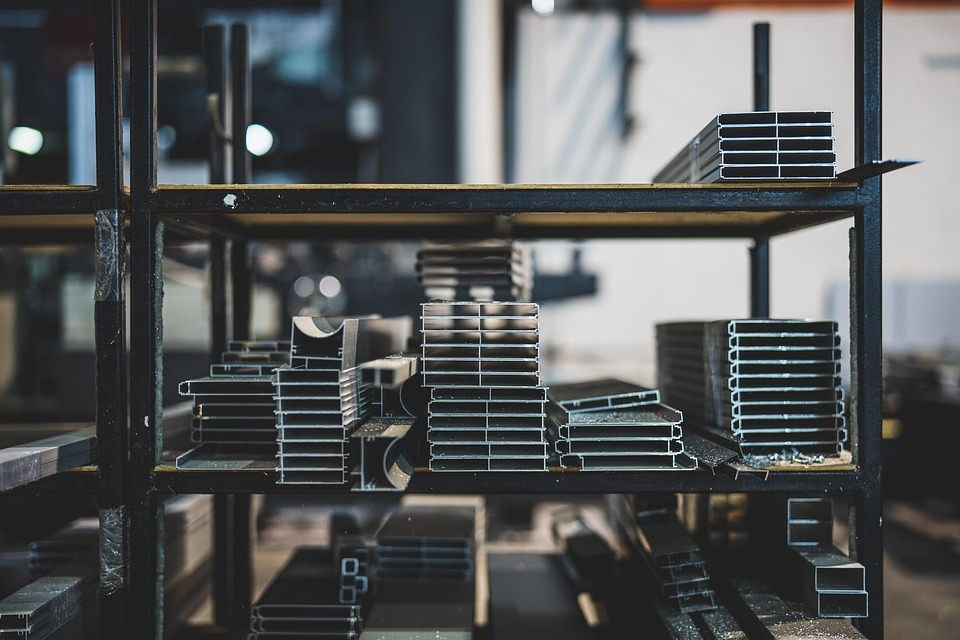

In the realm of contemporary construction and industrial design, few materials have proven as versatile and indispensable as the aluminum profile. These precisely engineered extruded shapes form the literal and metaphorical framework for countless applications, from sleek building facades and energy-efficient windows to durable industrial machinery and high-tech transportation systems. The journey of an aluminum profile—from raw material to finished product—encapsulates a story of advanced engineering, material science, and sustainable innovation that is fundamental to modern manufacturing.
The process begins with high-quality aluminum billets, typically alloys from the 6000 series (like 6061 or 6063), prized for their excellent combination of strength, corrosion resistance, and extrudability. These alloys are heated to a specific temperature and forced under immense pressure through a precision-designed steel die. This extrusion process allows for the creation of continuous, complex cross-sectional shapes that would be impossible or prohibitively expensive to achieve through other manufacturing methods like rolling or machining. The versatility of extrusion is the aluminum profile's greatest asset, enabling designers to integrate multiple functions—such as thermal breaks, sealing grooves, screw channels, and aesthetic details—directly into a single, cohesive profile.
Once extruded, the profiles undergo critical treatments that define their performance and longevity. Thermal Break Technology is paramount for architectural applications in temperate climates. This involves inserting a polyamide or polyurethane bar between two aluminum profiles and mechanically knitting them together. This barrier drastically reduces thermal conductivity, preventing heat loss in winter and heat gain in summer, which is essential for achieving modern energy efficiency standards in curtain walls, windows, and doors.
Surface finishing represents another crucial stage. Options range from Anodizing, an electrochemical process that creates a hard, corrosion-resistant oxide layer integral to the metal (common in architectural and marine applications), to Powder Coating, which applies a decorative and protective polymer layer in virtually any color. For demanding environments, PVDF Coating offers superior resistance to UV radiation and chemical exposure, making it ideal for exterior architectural projects. These finishes not only enhance durability but also provide the aesthetic versatility that architects and designers demand.
The structural integrity of an aluminum profile is a product of its alloy composition, cross-sectional design, and wall thickness. Engineers use sophisticated software to design profiles that optimize strength-to-weight ratios. This makes aluminum profiles exceptionally strong yet lightweight, a critical advantage in applications like aerospace components, automotive frames, and modular structures where reducing dead load is essential. Their inherent corrosion resistance, due to a naturally forming protective oxide layer, ensures longevity even in harsh environments, minimizing maintenance needs over decades of service.
In practice, the application spectrum of aluminum profiles is vast. In construction, they form the skeletons of curtain walls, the frames of windows and doors (incorporating systems for glass, seals, and hardware), and the structures for partitions and roofing. In industrial design, they are the basis for machine frames, conveyor systems, protective guards, and cleanroom frameworks due to their rigidity, cleanliness, and ease of assembly. The transportation sector relies on specialized high-strength aluminum profiles for railcar bodies, truck trailers, and marine components, leveraging their lightweight nature to improve fuel efficiency and payload capacity.
Furthermore, aluminum profiles are at the heart of the modular and sustainable design movement. Their ability to be precisely fabricated and easily assembled/disassembled supports circular economy principles. Aluminum is infinitely recyclable without loss of its inherent properties, and the extrusion process itself is relatively energy-efficient, especially when using recycled content. This makes aluminum profiles a preferred choice for projects targeting LEED or BREEAM sustainability certifications.
Looking forward, innovation continues to push the boundaries of what aluminum profiles can achieve. The development of new, higher-strength alloys expands their use in load-bearing applications. Digital fabrication techniques, like CNC machining and automated cutting, allow for unprecedented precision in custom projects. The integration of smart technologies, such as profiles with built-in channels for wiring and sensors, is facilitating the growth of intelligent buildings and automated industrial systems.
In conclusion, the aluminum profile is far more than a simple metal shape. It is a highly engineered component that balances form, function, and sustainability. Its unique combination of lightweight strength, design flexibility, corrosion resistance, and recyclability has secured its role as a foundational material for the 21st century. From the skyline of a modern city to the assembly line of a factory, aluminum profiles provide the silent, strong, and smart backbone that supports progress and innovation across industries.